Send objects to your friends.
Scegli il tuo regalo:

Jeraddo
Star Trek - Astronomy
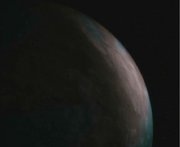
Jeraddo (or Lunar V) was the fifth of Bajor's five moons. It has a molten core.
Lambda Paz
Star Trek - Astronomy
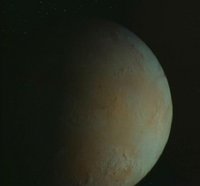
Primary: Pentarus III Class: M Diameter: 3,045 km Mass: 34.823 SPU Mean Surface Temperature: 55.7 °Celsius Surface gravity: 0.78 g
Norcadia Prime
Star Trek - Astronomy
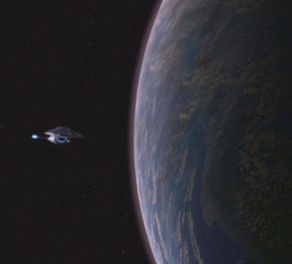
Norcadia Prime is a Theta-class planetoid in a binary star system in the Delta Quadrant, homeworld to the Norcadians, with a population of 260 million.
Regula
Star Trek - Astronomy
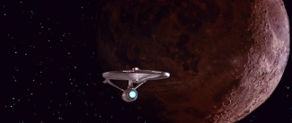
Regula is a remote planetoid in the Mutara sector within Federation space, a Class D body according to the planetary classification. Regula is orbited by the research outpost Regula I.
The Waters
Star Trek - Astronomy
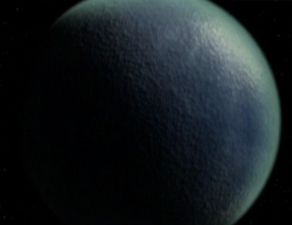
The Waters was the Monean name for a unique planetoid in the Delta Quadrant composed almost entirely of water. In 2375, it had a radius of 600 kilometers and held a volume of water greater than the Atlantic and Pacific oceans of Earth combined. The Waters contained a complex ecology, including a giant lifeform similar to an electric eel.
Companion's homeworld
Star Trek - Astronomy
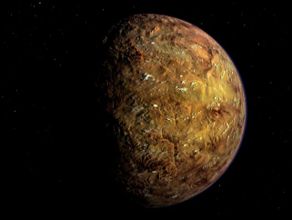
The homeworld of the Companion was an undiscovered planetoid found in an asteroid belt located in the Gamma Canaris region.
Azati Prime (planetoid)
Star Trek - Astronomy
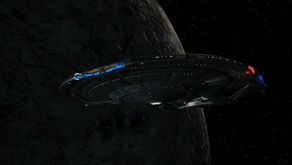
Azati Prime is a Class D planetoid located on the outskirts of the Azati Prime star system. It has a rotation of about eight hours.
Titan
Star Trek - Astronomy
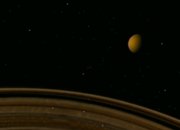
Titan is the largest moon of Saturn, the sixth planet in the Sol System and is named after the Titans, sisters and brothers of Cronos, the Greek Saturn, according to Terran mythology. Titan's diameter is nearly half that of Earth and it is larger than the planet Mercury; it is the only moon in the Sol System to posses an atmosphere which is largely composed of nitrogen and methane, with an atmospheric pressure of 1.6 bars and a mean surface temperature of approximately –178 °C.
Tarok
Star Trek - Astronomy
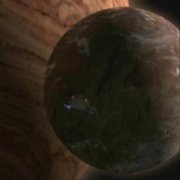
Tarok is a M-class moon in the Delta Quadrant, location of a Kazon-Ogla training camp. There are enough concealed weapon systems on the moon to destroy the entire surface, including phaser banks, force fields, and photon dischargers. These generate a large amount of radiothermic interference, making sensor scans of the surface impossible.
Rinax
Star Trek - Astronomy
Rinax is a moon of the planet Talax. It was one of the most pleasant locations in the system. A once-famous region on Rinax was the Rinax marshlands, known for the hottest climate of the sector. (VOY: "Macrocosm")
Praxis
Star Trek - Astronomy
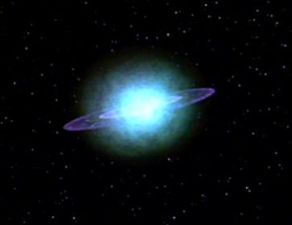
Praxis was a Klingon moon. It was a key energy-production facility for the Klingon Empire until 2293.
Lunar V
Star Trek - Astronomy
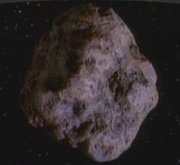
Lunar V is a moon in orbit of Angosia III. Following the Tarsian War, the Angosian government exiled its veterans to Lunar V because the psychologically and physiologically conditioned soldiers could not adapt to normal society. The original intention was for the moon to be their colony, but some soldiers resisted the resettlement and so the colony was turned into a maximum-security facility.
Luna
Star Trek - Astronomy
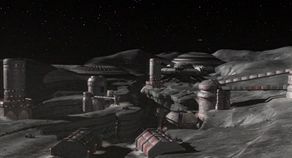
Luna, known on Earth as simply the Moon, is the only natural satellite of the planet Earth.
Derna
Star Trek - Astronomy
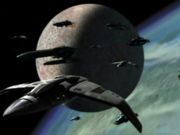
Derna is the small and uninhabited fourth moon of the planet Bajor.
Andoria
Star Trek - Astronomy
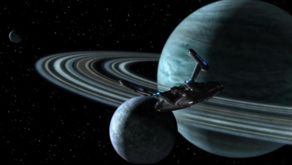
The moon of a ringed gas giant, Andoria was the capital world of the Andorian Empire, one of the founding members of the United Federation of Planets and home to the Andorians and the Aenar.
Beta moon
Star Trek - Astronomy
Beta moon is the inner moon of the planet Peliar Zel II. It was colonized by the Peliar Zel natives sometime in the 19th century. Throughout their history they had been at war with Alpha moon, but ambassador Odan managed to negotiate a peace in 2337.
Alpha moon
Star Trek - Astronomy
Alpha moon is the outer moon of the planet Peliar Zel II. It was colonized by the Peliar Zel natives sometime in the 19th century.
Sword of Stars
Star Trek - Astronomy
In Bajoran prophecy, the Sword of Stars was an object that, according to interpretations of Trakor's Third Prophecy, would destroy the Celestial Temple.
Burke (comet)
Star Trek - Astronomy
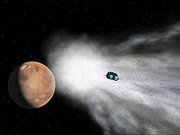
Burke was the designation of a comet orbiting Sol until the mid-22nd century.
Icarus IV
Star Trek - Astronomy
Icarus IV was a comet that passed near the Federation-Romulan border in 2266. The comet was crossed by the Romulan Bird-of-Prey during the Neutral Zone Incursion of 2266, thereby revealing the position of the cloaked ship to the USS Enterprise. (TOS: "Balance of Terror")
Archer's Comet
Star Trek - Astronomy
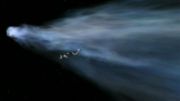
Archer's Comet was a comet discovered by the Earth ship Enterprise in June 2151. With a diameter of 82.6 kilometers, the comet was the largest ever observed by Humans.
Yonada
Star Trek - Astronomy
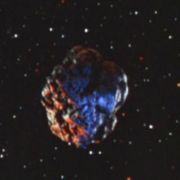
Yonada was a a 10,000-year-old asteroid-ship, built by the Fabrini when they realized that their home sun was about to go supernova and destroy all life on their planet. Yonada was constructed out of a hollowed-out asteroid and was sent on a computer-controlled course to a habitable colony world. In 2268, the USS Enterprise encountered the worldship when it was fired upon by the automated defense systems of Yonada.
Talaxian asteroid colony
Star Trek - Astronomy
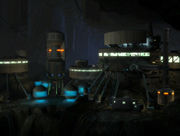
The Talaxian asteroid colony was an asteroid located in the Delta Quadrant that was colonized by several Talaxians who left their homeworld in the late 24th century.
Rura Penthe
Star Trek - Astronomy
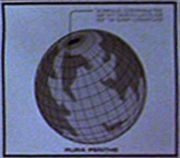
Rura Penthe was a penal colony asteroid of the Klingon Empire. Located in the trinary Rura Penthe system within two sectors of the Federation border, it was widely known as "the aliens' graveyard".
Internment Camp 371
Star Trek - Astronomy
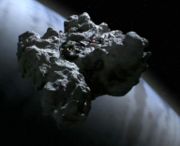
Internment Camp 371 was a Dominion prison facility located on an asteroid orbiting a gas giant planet, in operation in the 2370s. Originally built as an ultritium mine, the camp held many survivors of the Battle of the Omarion Nebula following the destruction of the Romulan/Cardassian fleet, including Enabran Tain. In the camp Jem'Hadar weapons were always set on maximum, which would vaporize prisoners for the smallest infractions.
Chamra Vortex asteroid
Star Trek - Astronomy
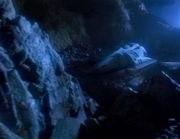
The Chamra Vortex asteroid is one of millions of asteroids located in the Chamra Vortex. It has a breathable atmosphere.
Asteroid gamma 601
Star Trek - Astronomy
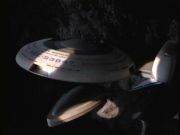
Asteroid gamma 601 was an asteroid in the Devolin system. The asteroid was fairly large and had several deep chasms large enough for a starship to enter. However, the internal structure was highly unstable; phaser fire within the chasms could cause collapse. The asteroid was located in the proximity of asteroid alpha 331 and asteroid beta 671.
Vandor IV
Star Trek - Astronomy
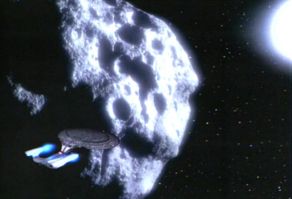
Vandor IV is a planetoid located in the Vandor system at coordinates 664.8 × 1323.7 × 4949.9. It is in an elliptical orbit around the binary star system. In 2351, it was selected by Dr. Paul Manheim as the location for his time experiments. Along with his team, he built two laboratories on opposite sides of the planetoid, one of which was located at 20°9'N × 40°2'E. During the next decade he managed to harness the power of the dense gravity of the pulsar in the system to open a window into
Ty'Gokor
Star Trek - Astronomy
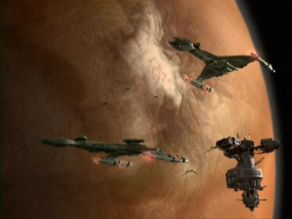
Ty'Gokor was a fortified planetoid located in an asteroid belt deep inside Klingon space.
Gamma II
Star Trek - Astronomy
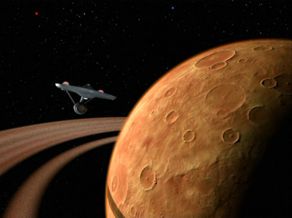
Gamma II was an uninhabited planetoid in the Gamma system that was used by the Federation, during the 23rd century, as an automatic communications and astrogation station.